Zeminous: A Retro Display Font for Scroll-Stopping Brand Content
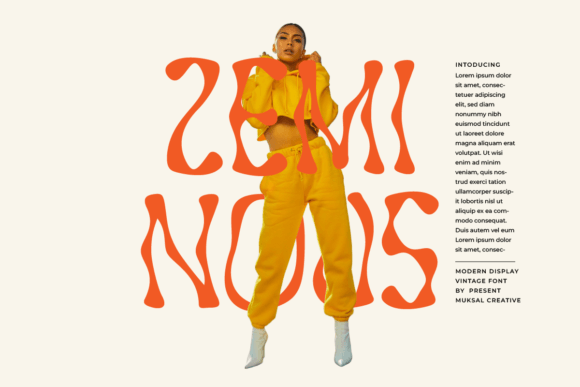
As a marketing specialist who builds high-converting visuals across Instagram, YouTube, email, and digital ads, I rely on Zeminous—a retro display font with unmistakable character—to cut through visual noise. It’s not just another decorative typeface; Zeminous is a strategic fonts asset that delivers instant recognition, emotional resonance, and platform-optimized clarity—whether you’re designing a Reels cover at 1080×1350 or a tiny product badge on a Shopify banner.
Zeminous for Editorial Projects and Digital Newsletter Headers
Zeminous thrives in editorial projects where tone and authority matter—think branded newsletters, Substack headers, or Medium article banners. Its retro charm adds warmth without sacrificing legibility, especially when scaled to 24–36pt for desktop or 20–28pt for mobile previews. Unlike overly ornate script fonts or rigid geometric sans serifs, Zeminous balances personality and precision. Pair it with a clean sans serif like Inter or Montserrat for body text, and you instantly establish hierarchy: Zeminous commands attention for the headline, while your supporting copy stays scannable and trustworthy.
Zeminous for Logo Design and Small Business Branding
When launching a new brand—or refreshing an existing one—Zeminous delivers standout logo design potential for lifestyle brands, indie boutiques, vintage-inspired apparel lines, and creative studios. As a display font, it’s engineered for impact at small sizes: test it at 16px in favicon mockups or 24px in app icons—it holds its shape and voice. Use Zeminous for wordmarks (not full slogans), monogram accents, or stacked logomarks. Its retro energy signals authenticity and craft—key traits audiences associate with premium small businesses. Just remember: always verify commercial licensing before embedding Zeminous into client-facing logos or white-labeled templates.
Zeminous for Clothing Labels and Merchandise Typography
If you’re designing t-shirt prints, tote bags, or limited-edition apparel drops, Zeminous is a go-to fonts choice for short, punchy statements (“Made With Care”, “Est. 2024”, “No Filter Needed”). Its bold terminals and subtle contrast give it tactile presence—like screen-printed lettering—without requiring special effects. On fabric mockups, Zeminous reads cleanly even in low-res previews used by print-on-demand platforms. For best results, use it exclusively for primary text (max 3–5 words), then pair with a neutral sans serif for care instructions or sizing charts. This keeps your clothing branding cohesive, confident, and instantly shareable on Instagram Stories or Pinterest pins.
Zeminous for YouTube Thumbnails and Instagram Reels Covers
In fast-scrolling feeds, Zeminous stops thumbs—not because it’s loud, but because it’s *distinct*. As a display font, it’s built for large-scale impact: use it at 48–72pt for YouTube thumbnail titles, or 36–52pt for Reels covers. Its retro styling evokes nostalgia and approachability—ideal for creators in wellness, education, or personal development niches. Crucially, Zeminous maintains readability at thumbnail size: no clipped serifs, no overlapping strokes, no ambiguous glyphs. Test it against dark or gradient backgrounds—it has strong weight distribution and generous spacing, so it won’t blur or pixelate on mobile devices. Add subtle stroke or shadow only if needed; Zeminous stands strong on its own.
Zeminous for Product Launch Announcements and Seasonal Promos
Whether you’re teasing a new skincare line, announcing Black Friday deals, or revealing a holiday collection, Zeminous elevates product launch graphics with curated energy. Its versatility across sizes means you can use the same fonts file for a hero banner (72pt), an email header (32pt), and a carousel slide callout (24pt)—ensuring visual consistency across your campaign. Unlike generic display fonts that feel dated or gimmicky, Zeminous lands as intentional, human, and memorable. Try it for short, benefit-driven phrases: “New Drop Live”, “Just Restocked”, or “Summer Edit”. Avoid long sentences—Zeminous shines brightest when every letter carries weight.
Zeminous for Branded Templates and Social Media Content Series
For marketers building reusable Canva templates, Notion dashboards, or branded Instagram highlight covers, Zeminous is a foundational display font that scales elegantly across formats. Its balanced x-height and open counters ensure legibility in both landscape and portrait orientations—critical for TikTok captions, Pinterest vertical pins, or LinkedIn banner text. When building a content series (e.g., “Tip Tuesdays” or “Founder Fridays”), use Zeminous for the recurring title element and a minimalist sans serif for variable content—this creates rhythm, reinforces memory, and strengthens brand recall over time. Bonus: its retro vibe pairs exceptionally well with muted palettes, grain textures, and analog-inspired UI elements—making your templates feel elevated, not templated.
Zeminous for Website Banners and Landing Page Headlines
Your homepage banner has ~3 seconds to communicate value—and Zeminous helps you win that moment. As a fonts solution optimized for both large and small sizes, it performs flawlessly in responsive web design: crisp at 64px on desktop, clear at 42px on tablet, and still legible at 32px on mobile. Use it for H1s only—never body text—and pair with a highly legible sans serif (like Poppins or Open Sans) for subheaders and CTAs. This pairing balances personality and practicality: Zeminous makes your offer unforgettable; your supporting type ensures action. For A/B testing, try Zeminous against a standard sans serif headline—you’ll likely see higher dwell time and scroll depth, especially among Gen X and millennial audiences drawn to thoughtful retro aesthetics.
Final Licensing Note
Before deploying Zeminous in client campaigns, paid ads, merchandise, or digital products, confirm your license includes commercial usage rights. Most display font licenses cover social media graphics and internal templates—but extended rights are required for resale items (e.g., editable Canva templates) or physical goods (e.g., printed posters sold publicly). When in doubt, review the official license terms: it’s a quick step that protects your brand—and your budget.